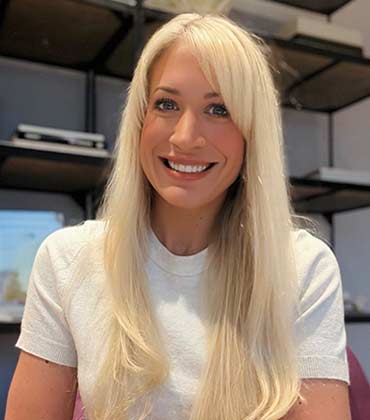
Lauren Vasilakopoulos
Product Innovation SpecialistLauren Vasilakopoulos is a seasoned HR professional with over a decade of professional experience spanning legal and human resources roles. Today, she serves as Director, HR North America and Global HR Compliance at IFF, where she leads field HR strategy across the U.S. and Canada and oversees global compliance, employee relations investigations and cultural risk insights. Known for her professionalism, leadership mindset and focus on inclusion and accountability, she plays a key role in shaping IFF’s people experience across multiple regions.
In an exclusive interview with Manage HR, Vasilakopoulos shared her invaluable insights on the industry, the prevailing challenges, and possible solutions.
A Career Built on Curiosity and Continuous Growth
My path into HR was not a straight one. I graduated with a political science degree in 2009, which was one of the most challenging years to enter the job market. I was initially prepared for a career in law. A paralegal role helped me explore multiple legal sectors, including employment law.
Around that time, a family friend suggested I look into HR because it combined people, strategy and a bit of law. The idea clicked. I decided not to pursue law school and instead began applying for entry-level HR positions.
I joined IFF as an HR associate in December 2014. It was an hourly, entry-level support role, and I learned everything from the ground up. Over the years, I took on projects others did not want, raised my hand for opportunities that challenged me, and worked my way up step by step.
Scaling Fast in a Transforming HR Organization
I stepped into my current role in March 2023, and overnight, I went from having no direct reports to leading a team of approximately 30 HR professionals supporting 5,000 employees across the U.S. and Canada. My team handles the day-to-day needs of our sites, including employee relations, coaching managers and running annual programs that keep the organization moving.
At the same time, we are still on a transformation journey following our integration with DuPont’s Nutrition and Biosciences Division. We have been shifting work to shared services so our HR business partners can become more strategic and focused on talent rather than tactical support. We are also harmonizing policies and processes across two large legacy organizations, which is no small task.
North America is a complex region for us. We represent about 35 percent of our North American sales. Our headquarters are in New York and we are co-headquartered now in Delaware. We continue to manage a rapidly changing legislative environment across many states. We also work with three labor unions and regularly engage in collective bargaining.
HR serves the business as well as the employee, and keeping both perspectives in balance is essential.
Along with my North America role, I also lead global HR compliance. That covers employee relations investigations, Speak Up hotline reports, quarterly updates to our CHRO, and trend and root-cause analysis. I am passionate about turning those insights into action so leaders can spot cultural issues early. I always say that if there is smoke, there is fire. Even if a report isn’t perfectly accurate, a pattern tells us something is going on, and we need to understand it.
Turning Challenges into Opportunities
We face pressures from within the organization and from the broader environment. Tariffs have tightened business conditions, leading us to adopt cost-control measures. Any uncertainty affecting the company inevitably impacts our people. Retaining new hires remains essential because the early months of their experience often shape their long-term commitment.
One of the biggest challenges is shifting the mindset around talent ownership. Many managers still rely heavily on HR and expect us to solve performance issues or drive talent decisions for them. My goal is to empower managers to take ownership of their teams. They are the most influential factor in performance, engagement and satisfaction. When they provide clear feedback, build strong teams and make thoughtful decisions, everything improves. Better engagement, better retention and fewer employee relations issues all flow from that empowerment. Helping leaders see that connection is one of the most essential parts of my job.
Listening First Builds Buy-In and Stronger Outcomes
My strategy always starts with listening. Whenever a challenge arises, I focus on identifying its underlying cause. HR often hears one side of a story, and the business hears another, and the truth is usually somewhere in the middle. Once I understand the issue, I look for opportunities to build trust through small wins before tackling the bigger changes.
One example is our harmonized attendance policy. Before we launched it, every site had its own way of doing things. We operate in 26 states and have 49 locations, so we needed one clear, consistent program. The challenge was that everyone had strong opinions on how it should work.
I used a process called red teaming. I gathered a group of plant managers across different locations, sizes and legacy companies. I walked them through the proposed changes, asked for feedback and invited them to be part of the process. By involving them early and incorporating their perspectives, they felt heard and supported. When it came time to implement the policy, we had their buy-in and their trust.
This approach works because people do not like losing control. When you bring them into the process, even if the final decision is not exactly what they suggested, they still feel included. They know their voice mattered.
Advice for HR Peers and Young Professionals
My advice is to always connect your day-to-day work to the bigger picture. HR serves both the business and the employee, and maintaining a balance between the two is essential. Lead with empathy because at the core of everything we do is the human experience.
Exposure is another key to growth. Get involved in projects, raise your hand and follow people who do the work well. Many of my most significant career steps came from taking on projects others avoided. Those experiences taught me new skills, expanded my network and opened the door to future opportunities.
Someone once told me that if you do not feel uncomfortable, you are not growing. I live by that. The moment you feel too settled is the moment you should challenge yourself again. Growth happens in those uncomfortable spaces, and I make sure every day includes at least a little stretch.