
Thank you for Subscribing to Chemical Industry Review Weekly Brief

HORIBA Elemental Analysis
Kayvon Savadkouei, Applications Scientist
Catalysts are critical to Petroleum industry and Catalyst poisoning is the biggest fear for petrochemical engineers.
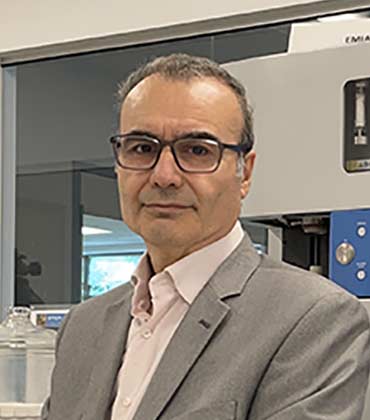
Kayvon Savadkouei
1. Introduction
Catalysts are fundamental to the modern petroleum and petrochemical industry, enabling the conversion of crude oil into essential fuels and chemical products. Refining processes such as catalytic cracking, reforming, hydrotreating, and alkylation rely on specialized catalysts to enhance efficiency, reduce environmental pollutants, and maximize product value. The catalyst market exceeds $650 million annually in the United States and over $1 billion worldwide. As vital catalytic processes are in petroleum refining, staying ahead of deactivation AKA poisoning control is important too. Knowing your catalyst's physical and chemical state at every stage of its lifecycle is critical and HORIBA offers a full suite of analytical instruments designed for this purpose. 2. Major Catalytic Processes in Petroleum Refining 2.1 Fluid Catalytic Cracking (FCC) FCC is one of the most important refining operations, converting heavy hydrocarbons into lighter, high‑value products such as gasoline and LPG. This process consumes more than 380 million pounds of catalyst per year. 2.2 Catalytic Reforming Platinum‑based catalysts restructure naphtha into high‑octane aromatics essential for gasoline production. Reforming significantly enhances both product value and refinery profitability 2.3 Hydrotreating and Hydrocracking Hydrotreating removes sulfur, nitrogen, and metal contaminants, improving fuel quality and reducing harmful emissions. Catalysts such as Co‑Mo and Ni‑Mo on alumina supports enable sulfur–carbon bond cleavage, improving sulfur removal efficiency even for heavy, sour crudes. 2.4 Alkylation This process produces high‑octane blending components using sulfuric or hydrofluoric acid catalysts. Global consumption exceeds 200 million pounds annually.
3. Impact on the Industry: • Efficiency: Catalysts significantly reduce energy consumption and processing time. • Profitability: They allow for higher conversion rates of feedstock into valuable products. • Environmental Compliance: Catalysts are crucial for producing cleaner fuels by removing pollutants, and in catalytic converters for emission control. 3.1 Sulfur Removal Efficiency To reduce harmful emissions in petroleum refining, the removal of sulfur is required. This is because the sulfur compounds found in crude oil are transformed into sulfur dioxide (SO2) during combustion, which is a significant contributor to air pollution and acid rain. To address this issue, refiners utilize hydrotreating processes, in which catalysts aid in the removal of sulfur by converting it into hydrogen sulfide (H2S), which can then be captured and processed. The hydro desulfurization reaction (HDS) relies on cobalt-molybdenum or nickel-molybdenum catalysts on Al2O3 support. The high surface area and acidic properties of these catalysts promote the adsorption of sulfur compounds, allowing the active metal sites to break sulfur-carbon bonds and facilitate hydrogenation. These properties are critical for enhancing sulfur removal efficiency, particularly when processing heavy and sour crude oils with high sulfur content. 3.2 Reduction of Nitrogen Oxide (NOx) Formation Reducing NOx emissions is another important environmental objective for refining systems. NOx, a combination of nitric oxide (NO) and nitrogen dioxide (NO2), is produced during fuel combustion and contributes to smog and causes respiratory problems. Catalytic processes can minimize NOx formation, especially in the treatment of refinery off-gases and fuel combustion. Selective catalytic reduction (SCR) is a widely used method for NOx control, which involves reducing NOx to harmless nitrogen (N2) and water vapor. This process utilizes catalysts based on vanadium, tungsten, or zeolite materials, which provide a high surface area and the thermal stability necessary for effective NOx reduction [10]. SCR relies on ammonia as a reducing agent, which reacts with NOx at the active sites of the catalyst to form nitrogen and water. 4. Catalyst Deactivation and Poisoning Catalyst deactivation poses significant operational and economic challenges to industry. Poisoning occurs when contaminants such as Sulfur, heavy metals, or nitrogen base contaminating materials bind irreversibly to active sites. Catalyst poisoning can reduce hydrotreating efficiency, increase coke formation in FCC units, and a measurable drop in octane yield from reforming. The cost of undetected deactivation adds up fast.
| Common Poisoning Agents | Impact on Refining Process | Mitigation Strategies |
| • Sulfur compounds (H₂S, SO₂) • Heavy metals (Ni, V, Fe, Cu, Pb) • Nitrogen‑based compounds • Phosphorus and silicon from lubricants and additives | • Reduced activity in hydrotreating and hydrocracking • Increased coke formation in FCC • Lower octane yield in reforming | • Pretreating feedstocks • Using guard beds • Routine monitoring and regeneration |
| Measurables | Issues | Analytical Techniques |
| Physical and Structural properties | • Reaction Yield • Quality Control • Performance Control | • Surface area (HORIBA SA 9650 BET method) • Pore size distribution • Attrition resistance (ASTM Air Jet) • Particle size distribution (HORIBA LA960) |
| Chemical and Surface Analysis | • Selectivity of Catalyst • Reduction of Activity • Poisoning Monitoring • Lifetime Measurements | • Carbon and Sulfur contamination (HORIBA EMIA) • Elemental composition (HORIBA Ultima ICP‑OES, XGT-9000 XRF) • X‑ray diffraction (XRD) • Scanning electron microscopy (SEM) |
The articles from these contributors are based on their personal expertise and viewpoints, and do not necessarily reflect the opinions of their employers or affiliated organizations.
