
Thank you for Subscribing to Chemical Industry Review Weekly Brief


Indorama Ventures
Jan Mandrup Olesen, Global Head of Digital Business
Advancing the Chemical Industry through Digital Transformation
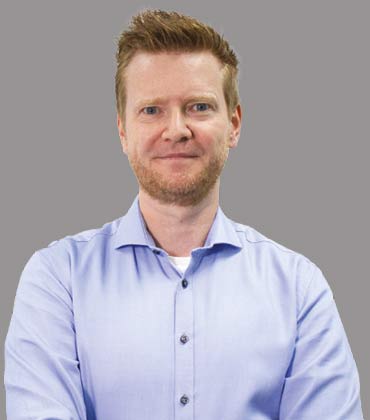
Jan Mandrup Olesen
Jan Mandrup Olesen is a seasoned leader in digital transformation, spearheading global business solutions at Indorama Ventures to digitize across the business solutions areas sales, procurement, logistics, finance and HR within a complex, multinational chemical manufacturing network. He focuses on driving innovation, efficiency and resilience through advanced technologies and strategic initiatives.
In an interview with Applied Technology Review APAC, Jan Mandrup Olesen shares insights on his leadership journey, perspectives on digital transformation in the chemical industry and the role of emerging technologies in driving innovation and operational excellence. Can You Briefly Describe Your Current Leadership Role At Indorama Ventures And Outline Your Primary Areas Of Responsibility Within The Organization? I serve as the head of global business solutions at Indorama Ventures, leading the non-manufacturing part of our global digital team. My focus is on digitizing and enabling efficiency and alignment across all business functions. This includes key areas such as sales excellence, procurement, logistics, finance and HR. With operations spanning more than 100 plants in over 30 countries, I’m responsible for ensuring that our supporting systems work seamlessly across regions, helping the organization run effectively and adapt to changing needs. What Are Some Of The Common Challenges Your Sector Faces, Particularly In Relation To The Rapid Evolution Of Modern Technologies? As a global B2B chemical manufacturing company, we produce essential materials like polyester fibers, PET and downstream chemicals that serve as foundational components in countless products. Much of our business, particularly in PET, operates in the commodity space, which means we contend with the constant cost competition. Another significant challenge is managing a global footprint that includes more than 100 plants across more than 30 countries. Many of these sites came through acquisitions, resulting in a highly diverse network with varying levels of technological maturity and organizational culture. Implementing uniform digital solutions across such a landscape is complex, as systems must be flexible enough to work in vastly different environments. Geopolitical uncertainty, shifting tariffs, and fluctuating logistics costs further complicate how and where we operate. Sometimes, offshore production is more viable; at other times, local production is more cost-effective. The dynamic nature of these factors requires constant need to optimize our operations. Workforce demographics present an additional challenge. Many experienced employees are nearing retirement, particularly in the U.S., and younger talent often shows less interest in traditional manufacturing roles, especially in remote locations. This creates a skills gap that adds urgency to adopt technologies that can bridge knowledge transfer, increase automation and make industrial careers more attractive. These challenges form the backdrop for our digital transformation efforts. We are working to create an enterprise that is more connected, responsive and capable of adapting to fast-changing conditions. Could You Elaborate On The Specific Steps Or Initiatives Indorama Ventures Is Taking To Address Or Mitigate These Challenges? We’re addressing these challenges through several focused digital transformation initiatives. A key priority is building a digital twin of our global supply chain. This allows us to simulate disruptions and quickly determine the most efficient way to respond, whether it’s shifting production, rerouting logistics, or reallocating resources across our global manufacturing footprint. Procurement is another major area of focus. In the chemical industry, raw materials, energy and catalysts represent significant costs. By using advanced digital tools, we’re unlocking substantial value through smarter, more centralized procurement. In a low-margin environment, every efficiency counts.The most important mindset is to be bold and resourceful in adopting new technologies.
The articles from these contributors are based on their personal expertise and viewpoints, and do not necessarily reflect the opinions of their employers or affiliated organizations.
