


Thank you for Subscribing to Chemical Industry Review Weekly Brief
Chemical Industry Review: Specials Magazine
Nothing has shaken the logistics industry as much as Covid – thoroughly planned, well-calculated and presented budgets were simply blown away in the blink of an eye. It was a difficult lesson, but still, it really helped refine internal processes and carefully the money left in the company’s pocket. What’s behind the scenes, however, of getting your goods on time, in full, in a cost-effective way as a shipper? Precisely, it is the right process and technology to support your own Freight Audit & Payment capabilities. Now, it is fair to say that suppliers are looking forward to getting paid, and this is part of the process to build a good relationship with your partners. From a process point of view, it is essential to build a structured route: roles and responsibilities (externally, internally), exhaustive granularity on cost elements with necessary proofs (i.e., demurrage, detention, any non-negotiated costs), and precise actions to be completed. Yet, current contracts include complex costing schemes to cover different cases and remain competitive enough in the current landscape. One may be wondering: How long does it take for a shipper to qualitatively check the content of invoiced elements? Short answer: not more than 15 minutes and longer, maybe a few days, even a week or two, while digging into the tariffs agreed upon, waiting for proof or negotiating discounts with suppliers. Usually, the guys operating the freight are the ones assigned to validate the right costing that appears on invoices, and you can simply imagine priorities always vary at a given moment: get the shipping done or get the costing right.
Fuel Catalyst Manufacturer
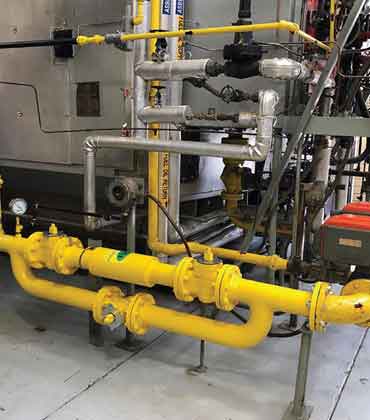
Two influential factors significantly impact businesses across all industrial sectors. First, the persistent high cost of fuel substantially challenges financial profitability, necessitating resource optimization and cost reduction. Second, pollution presents a dual threat, encompassing ecological and financial implications that reverberate through industries. At this juncture of economic burden and environmental consciousness, a transformative force emerges—the Fitch Fuel Catalyst by Advanced Power Systems International, Inc. (APSI). The catalyst is a heterogeneous metallic alloy (HMAC) that, when in use, reformulates the molecular composition of fuel at ambient temperatures and pressures. It is a true catalyst, setting a new standard for enhancing fuel efficiency and reducing emissions. “The Fitch Fuel Catalyst possesses a distinct capability to reformulate gasoline, diesel, fuel oil, propane, and natural gas. This innovation unlocks latent energy potential within fuels, delivering reduced fuel consumption or heightened production and performance, increased horsepower, and torque, to customers,” says Win Fitzpatrick, President of APSI. A remarkable aspect of the Fitch Fuel Catalyst is its substantial influence on emissions. Promoting more complete combustion reduces harmful emissions, including greenhouse gases, polyaromatic hydrocarbons, particulates, and soot.
Wood Preservative Supplier 2025

While many pest control companies and manufacturers strive to provide effective solutions for insect infestations and rodent invasions, success at Nisus Corporation is driven by more than just products. It’s rooted in the deep expertise of the highly credentialed team and a commitment to a collaborative, customer-focused work culture. The company’s specialists bring years of experience in their respective fields, ensuring they not only understand the technical aspects of pest control but also excel at working closely with customers to solve their distinct challenges. By fostering a culture of team-driven innovation and prioritizing public health, Nisus consistently achieves customer satisfaction and meets business objectives. “We believe that people are our greatest asset, and we are committed to creating a collaborative and healthy culture for our employees. We also prioritize supporting our communities, including the region in which we work and our industry as a whole. We want to be a pillar of support for pest professionals in the field,” says Lee Barrett, president of Nisus Corporation. Nisus is a privately-held chemical manufacturing company that offers sustainable borate and other active ingredient products for the professional pest control, industrial wood protection, and agricultural liquid micronutrient industries. The word ‘nisus’ essentially means a perfecting urge, an irresistible impulse to keep driving toward a goal. The company’s aim is to put that ethos to work, developing products that outperform existing solutions while offering a superior environmental profile. The Key to Success: Skilled Teams and Strong Culture The top priority for Nisus Corporation is placing skilled individuals in roles that match their expertise, sometimes in surprising ways. The company’s success is driven by the quality of individuals within the organization and the strong company culture it has cultivated. Barrett strives to empower his team by maintaining transparency in communication to ensure everyone is aligned and informed while fostering an open dialogue that brings individual expertise to the forefront. Advanced Borate Products for Pest Management The experience and expertise of the Nisus team allow them to work with clients to combat increasing termite pressure by providing flexible and effective solutions like Bora-Care®, Tim-bor®, and Penashield®. These products harness the power of borates to defend untreated lumber and other materials from threats posed by wood-destroying organisms such as termites, carpenter ants, or even decay fungi. Borates work by killing the microorganisms in the digestive tracts of insects like termites, preventing them from breaking down wood cellulose and effectively causing them to starve. This gut-destroying mechanism of borates is effective in controlling ants, cockroaches, crickets, and silverfish, among other listed pests.
Liquid Chemical Transportation Services
Safe and efficient tank container transportation demands expertise and hands-on experience—qualities Zafer Tank Taşıma has honed since 1996. Its motto, ‘We Know How,’ reflects a steadfast commitment to precision, safety and reliability in one of the most demanding logistics sectors. A specialist in transporting liquid chemicals, including dangerous goods, Zafer Tank Taşıma possesses a deep understanding of every stage of the tank container transport process. The company operates on the belief that its success is intertwined with that of its clients. By delivering cost-efficient, high-quality services, Zafer Tank Taşıma empowers clients to secure contracts and outperform competitors. “We think of ourselves as a representative of our customers and take every measure to support them in achieving their desired outcomes,” says Fahri Onur YILMAZ, Owner. “When they thrive, we thrive.” Zafer Tank Taşıma’s all-in-one service package goes beyond transportation, offering storage, heating and customs clearance for liquid chemicals. Its fleet is supported by strategically located facilities near major Istanbul ports, allowing cargo to remain within a single secure chain of custody. Containers can be stored after discharge until their next assignment or returned directly to the port. By overseeing every stage in-house, the company offers customers a single point of contact, reducing complexity and improving communication. Its infrastructure and organizational framework are designed to meet the strictest safety and quality standards set by the Agreement concerning the International Carriage of Dangerous Goods by Road (ADR) and local regulations. Every truck in the fleet is ADR-certified, every driver holds SRC5 credentials and the general manager is an officially recognized SRC5 trainer. Certifications from SGS International in ISO 9001, 14001 and 45001 attest to unmatched operational quality, while successful SQAS audits in 2020 and 2023 confirm alignment with international benchmarks. International clients benefit from local market insights that help them remain cost-effective, while alternative solutions are proposed whenever they can provide an advantage. This long-term, relationship-first approach is reinforced by the team’s ability to swiftly adapt to evolving industry requirements, ensuring that even last-minute adjustments cause no disruption. When challenges arise, Zafer Tank Taşıma delivers. In one instance, unloading a client’s tank container carrying dangerous chemicals required a rare piece of equipment. By sourcing the exact equipment, Zafer Tank Taşıma’s logistics team eliminated the possibility of unsafe handling and allowed operations to proceed without costly delays.

CXO INSIGHTS

In the Tension Between Price Increases and Supply Chain Problems-With 3d Printing for Acute Problem Solving
Ralf Anderhofstadt, Head of Additive Manufacturing Solutions (AMS) Daimler Truck, Daimler Buses GmbH

Evolution of the Chemical Industry
David Bem, CTO, Senior Vice President Science and Technology, PPG

Advancing Science for a Better Life
Johnny Ivanyi, Global Head of Logistics CoE, Bayer

Plastics Lighten the Load and Increase Sustainability in the Transportation Industry
Melissa Cohen, Vice President, Supply Chain and Procurement, INEOS Styrolution America

Elevating Supply Chain Excellence
Julie McAlindon, Senior Vice President, Regions and Chief Supply Chain Officer, Eastman


IN FOCUS

The Role of Catalyst Solutions in Revolutionizing Efficiency in Chemical Industrial Processes
Catalyst solutions are, therefore, a pre-condition for effectiveness and sustainability in the chemical industrial process.

Growth Factors Driving the Chemical Consultants Market
Chemical consultants play a crucial role in the industry by providing services in process optimization, regulatory compliance, research, market analysis, and strategic planning.
EDITORIAL
Low-Carbon Production: Shaping the Future of US Chemicals
A renewed emphasis on sustainability and carbon reduction is propelling the US chemical industry into a new age. Chemical firms are making significant investments in lowcarbon technology and processes to ensure a competitive future as state and federal regulations tighten emissions objectives and consumers want greener products.
Major companies today are moving toward renewable feedstocks, electrifying chemical processes, and increasing carbon capture and storage (CCS). Innovations in bio-based materials, green hydrogen, and circular production methods are gaining popularity quickly and provide opportunities to drastically reduce emissions without compromising efficiency or profitability.
Advanced manufacturing is also playing a crucial role. Digital technologies such as AI, machine learning, and predictive analytics are optimizing energy use, improving yields, and reducing waste. Smart chemical plants are no longer a vision, they are becoming a reality, helping companies meet both economic and environmental goals.
Still, challenges remain. Scaling new technologies demands significant capital, and regulatory clarity is essential to accelerate investment. Building the necessary renewable energy infrastructure to support low-carbon chemical production is another pressing need. Strong collaboration across industry, government, and research institutions will be critical to overcome these hurdles.
The momentum is clear and growing. New projects are being announced across the United States, from green ammonia plants to circular plastics facilities. The Inflation Reduction Act and other incentive programs are providing additional tailwinds, encouraging faster innovation and deployment.
The US chemical sector is not just adapting to a low-carbon future, it is actively building it. With strategic investments, technological leadership, and a commitment to sustainability, the industry is poised to redefine what responsible manufacturing looks like on a global stage.
